
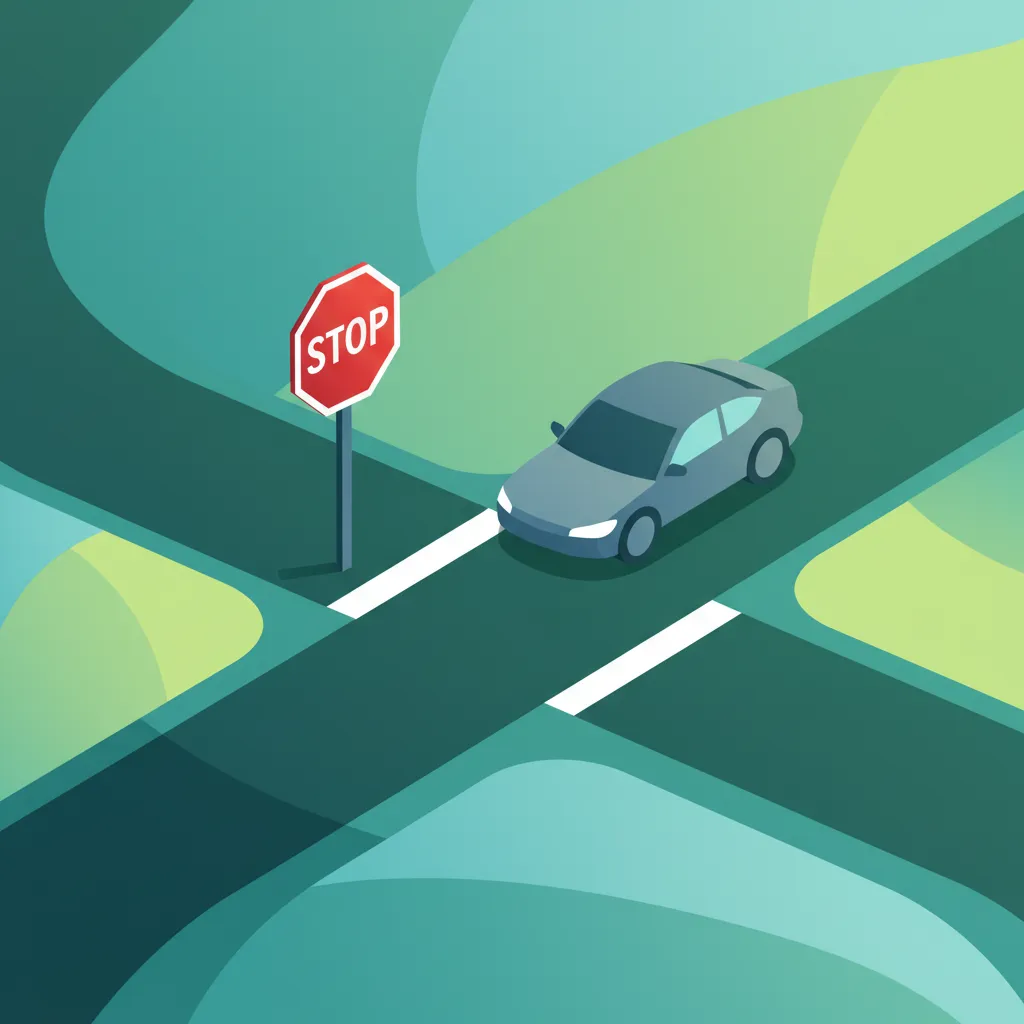
The stop sign (verkeersbord B07) is a fundamental regulatory sign in Dutch traffic, indicating that drivers must always come to a complete halt before proceeding. Unlike a give way sign, the stop sign demands a full stop even when the intersecting road appears clear. Mastering this rule is essential for road safety and passing your driving theory exam in the Netherlands.
Theory topic content overview
Read the full theory topic guide for Stop Sign (B07) Rules with structured, easy-to-scan content built for learners in the Netherlands. This detailed section explains the exact rule, meaning, traffic context, comparison points, and exam logic behind this Dutch driving theory topic so you can study faster, understand the concept more clearly, and avoid common interpretation mistakes on the theory test.
The stop sign, officially known in Dutch traffic as verkeersbord B07, is one of the most unambiguous and critical regulatory signs you will encounter. It is part of the 'B' category of signs, which deal with priority rules, and its message is simple yet absolute: you must come to a complete stop.
This page will break down the precise meaning of the B07 stop sign, why it's so important for safety, and how to correctly navigate intersections controlled by it – a crucial aspect for both your CBR theory exam and practical driving in the Netherlands.
The B07 stop sign is an octagonal red sign with a white border and the word "STOP" in white capital letters. It signals a mandatory requirement for every driver to bring their vehicle to a full and complete standstill before proceeding. This means your wheels must cease all movement, even if only for a moment.
The core purpose of the stop sign is to enforce a critical safety pause, ensuring drivers have sufficient time to:
Critically, unlike other priority rules, the stop sign demands this halt regardless of whether other traffic is visible or not.
Understanding and correctly obeying the B07 stop sign is paramount for several reasons:
Navigating an intersection with a B07 stop sign requires a specific sequence of actions:
A common point of confusion for Dutch driving learners is differentiating the B07 stop sign from other priority-giving indicators.
B06 give way sign (an inverted white triangle with a red border) and haaietanden (white triangular markings on the road, often accompanying the B06 sign) both mean you must give priority to traffic on the intersecting road. However, they do not mandate a complete stop if the road is clear and you can proceed safely without hindering anyone. You may slow down and continue if the path is genuinely free. If traffic is present, you must stop to give way.Key Difference: The stop sign's unique demand is the absolute requirement for a full stop, even if the intersection is deserted. The give way sign (B06) and shark teeth markings (haaietanden) only require a stop if necessary to give priority.
Learners frequently make the following mistakes related to the B07 stop sign during their driving theory exam or practical lessons:
The B07 stop sign (verkeersbord B07) in the Netherlands is not a suggestion; it is a strict command. Always remember:
stopstreep.Mastering this rule is not just about passing your CBR exam; it's about making Dutch roads safer for everyone.
The B07 stop sign in Dutch traffic requires drivers to bring their vehicle to a complete standstill at the stop line before proceeding, regardless of whether other traffic is visible. Unlike the B06 give way sign and shark teeth markings, a full stop is always mandatory at a B07 sign. After stopping, drivers must give priority to all traffic on the intersecting road, including cyclists and pedestrians, and only proceed when the path is completely clear without hindering anyone. This rule is a frequent exam topic where learners lose points by confusing stop signs with give way signs or performing incomplete stops.
A short set of high-value points that capture the most important ideas from this theory explanation.
A stop sign (B07) mandates a complete standstill regardless of traffic visibility or road conditions
You must stop at or just before the stop line (stopstreep), not after it or too far before it
After stopping, you always give priority to ALL traffic on the intersecting road including cyclists and pedestrians
The B07 stop sign is legally mandatory in the Netherlands and failing to stop completely is a serious traffic violation
The stop sign requires an absolute halt; even brief wheel movement constitutes a violation
The B07 stop sign requires a mandatory complete stop; the B06 give way sign and shark teeth (haaietanden) do not require stopping if the road is clear
If no stop line is present, stop before entering the intersection at a point with clear visibility
After stopping, you must give priority to all road users on the intersecting road, not just vehicles
Stop signs are placed at high-risk intersections where limited visibility makes a mandatory pause essential for safety
Early recognition and speed reduction should begin as you approach the sign, but the complete stop still must occur at the line
Performing a 'rolling stop' instead of bringing the vehicle to a genuine complete standstill with wheels not moving
Confusing the stop sign (B07) with the give way sign (B06) or shark teeth and attempting to roll through when the road appears clear
Stopping after the stop line, which obstructs cross-traffic visibility and path
Overlooking vulnerable road users such as cyclists and pedestrians when checking the intersecting road
Assuming priority after stopping, when in fact all traffic on the intersecting road has priority over you
Start with a short, direct summary of Stop Sign (B07) Rules before reading the full explanation below.
In the Netherlands, a stop sign (B07) mandates that you bring your vehicle to a complete standstill before the stop line, or before the intersection if no line is present. You must stop regardless of whether other traffic is visible. After stopping, you must give priority to all traffic on the intersecting road and only proceed when it is safe to do so without hindering others.
Review the most important terms, rule signals, and traffic concepts linked to Stop Sign (B07) Rules.
Explore related theory topic pages connected to Stop Sign (B07) Rules and continue with the next useful rule explanation.
See the common search queries learners use when trying to understand Stop Sign (B07) Rules in the Netherlands.

Ready to deepen your understanding? Browse our comprehensive library of Dutch driving theory topics, rules, and concepts. Each section offers detailed explanations to help you solidify your knowledge and prepare thoroughly for your upcoming CBR driving theory examination.
Explore Driving Theory TopicsTheory topic content overview
A short set of high-value points that capture the most important ideas from this theory explanation.
A stop sign (B07) mandates a complete standstill regardless of traffic visibility or road conditions
You must stop at or just before the stop line (stopstreep), not after it or too far before it
After stopping, you always give priority to ALL traffic on the intersecting road including cyclists and pedestrians
The B07 stop sign is legally mandatory in the Netherlands and failing to stop completely is a serious traffic violation
The stop sign requires an absolute halt; even brief wheel movement constitutes a violation
The B07 stop sign requires a mandatory complete stop; the B06 give way sign and shark teeth (haaietanden) do not require stopping if the road is clear
If no stop line is present, stop before entering the intersection at a point with clear visibility
After stopping, you must give priority to all road users on the intersecting road, not just vehicles
Stop signs are placed at high-risk intersections where limited visibility makes a mandatory pause essential for safety
Early recognition and speed reduction should begin as you approach the sign, but the complete stop still must occur at the line
Performing a 'rolling stop' instead of bringing the vehicle to a genuine complete standstill with wheels not moving
Confusing the stop sign (B07) with the give way sign (B06) or shark teeth and attempting to roll through when the road appears clear
Stopping after the stop line, which obstructs cross-traffic visibility and path
Overlooking vulnerable road users such as cyclists and pedestrians when checking the intersecting road
Assuming priority after stopping, when in fact all traffic on the intersecting road has priority over you
Start with a short, direct summary of Stop Sign (B07) Rules before reading the full explanation below.
In the Netherlands, a stop sign (B07) mandates that you bring your vehicle to a complete standstill before the stop line, or before the intersection if no line is present. You must stop regardless of whether other traffic is visible. After stopping, you must give priority to all traffic on the intersecting road and only proceed when it is safe to do so without hindering others.
Review the most important terms, rule signals, and traffic concepts linked to Stop Sign (B07) Rules.
Explore related theory topic pages connected to Stop Sign (B07) Rules and continue with the next useful rule explanation.
See the common search queries learners use when trying to understand Stop Sign (B07) Rules in the Netherlands.
Ready to deepen your understanding? Browse our comprehensive library of Dutch driving theory topics, rules, and concepts. Each section offers detailed explanations to help you solidify your knowledge and prepare thoroughly for your upcoming CBR driving theory examination.
Explore Driving Theory TopicsUse this exam-focused revision tip to understand how Stop Sign (B07) Rules is likely to appear in theory questions for learners in the Netherlands. This section helps you identify the most testable part of the rule, avoid common traps, and remember the concept more effectively during Dutch driving theory exam preparation.
Many learners confuse the stop sign (B07) with the give way sign. Remember, at a stop sign, you must always stop completely, even if the road is empty. Forgetting this mandatory stop will result in serious fault points on your CBR theory exam.
Read direct answers to the most common learner questions about Stop Sign (B07) Rules in the Netherlands. This FAQ focuses on rule confusion, practical meaning, comparison with similar concepts, and the exact uncertainties that appear most often in Dutch driving theory revision and exam preparation.
At a stop sign (B07), you are legally required to make a complete stop before proceeding, regardless of traffic. At a give way sign (B06), you only need to stop if necessary to give priority to other traffic.
Yes, in the Netherlands, the stop sign (B07) always requires a complete stop before the stop line or intersection, even if the road appears entirely clear.
You must stop before the stop line (a wide white line) on the road. If there is no stop line, stop before the intersection at a point where you have a clear view of crossing traffic without obstructing it.
The official Dutch name for the stop sign is "Stop" or "verkeersbord B07".
Stop signs apply to all drivers. While pedestrians and cyclists may not always have to stop, the priority rule associated with the stop sign means you must yield to them if they are already on the intersecting road when you proceed.
A stop line is a wide, continuous white line painted across the lane at an intersection or crossing point, indicating where vehicles must stop when required by a stop sign or traffic light.
Stop signs are typically placed at intersections with limited visibility or high accident risk to ensure drivers fully assess the traffic situation before entering the crossing, thereby enhancing safety.
Leverage the targeted practice search to find questions that challenge your understanding of specific Dutch traffic rules or road signs. Focus your study efforts on areas where you need improvement and build a solid foundation for passing your CBR driving theory exam with confidence.