
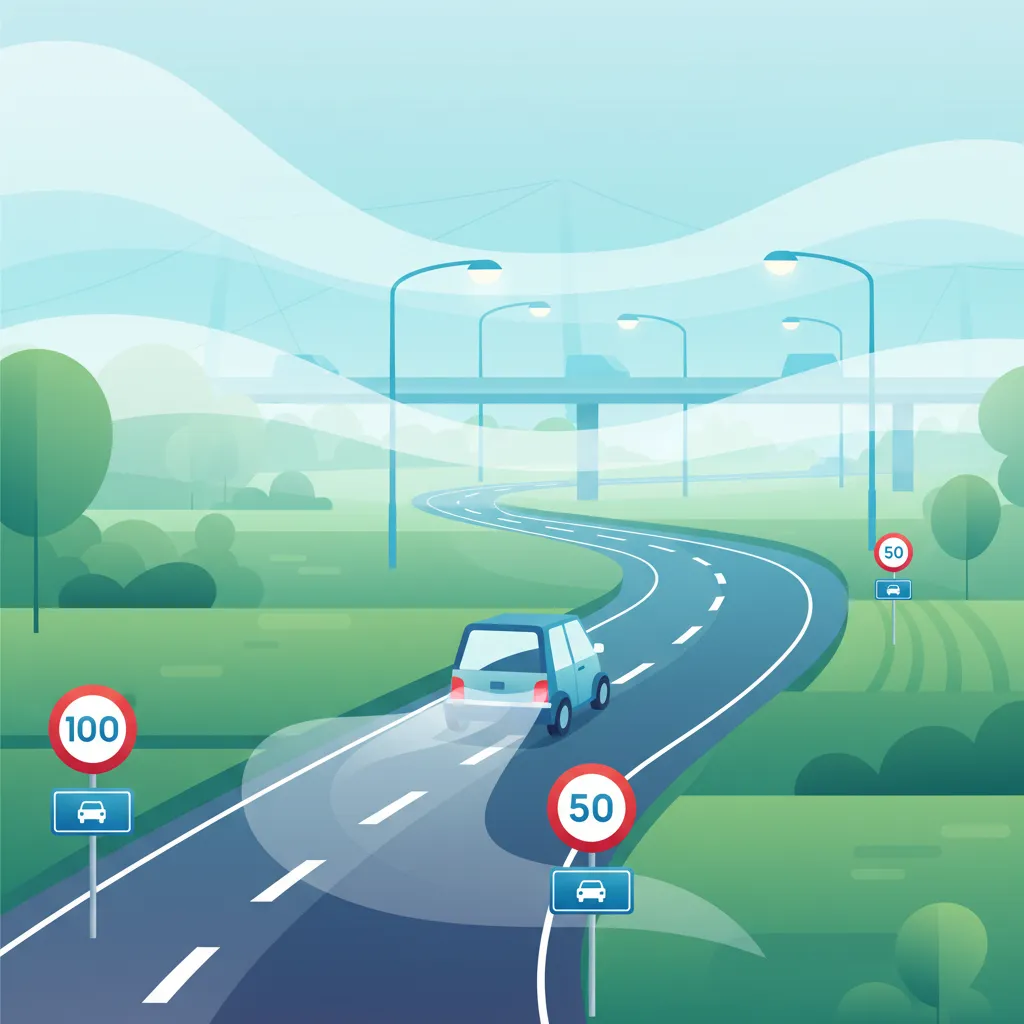
In the Netherlands, speed limits are clearly defined legal maximums that vary significantly across different road environments. While these limits set the fastest you are allowed to drive, the core principle of Dutch traffic law emphasizes that your speed must always be adapted to ensure safety. This means drivers must constantly assess conditions and often drive below the posted maximum.
Theory topic content overview
Read the full theory topic guide for Speed Limits with structured, easy-to-scan content built for learners in the Netherlands. This detailed section explains the exact rule, meaning, traffic context, comparison points, and exam logic behind this Dutch driving theory topic so you can study faster, understand the concept more clearly, and avoid common interpretation mistakes on the theory test.
Speed limits in the Netherlands are a fundamental aspect of traffic law, setting the maximum legal speed at which vehicles may travel on different road types and within specific areas. These limits are primarily designed to enhance road safety, reduce the severity of accidents, and promote efficient traffic flow.
Crucially for drivers in the Netherlands, the official speed limits are not merely suggestions, but legally binding maximums. However, Dutch traffic law, particularly as articulated in Article 19 of the Wegenverkeerswet 1994, places a higher emphasis on driver responsibility: "A driver must at all times be able to bring his vehicle to a standstill within the distance that he can see to be clear." This means that while a speed limit dictates the fastest you may drive, your speed must always be lower if conditions demand it for safety. This concept of aangepaste snelheid (adapted speed) is central to Dutch driving theory.
Understanding and adhering to speed limits, along with the principle of aangepaste snelheid, is vital for several reasons:
Speed limits in the Netherlands are clearly defined and vary significantly based on the road environment. Drivers must be aware of the default limits and specific signage.
Woonerf (Residential Area / Home Zone): Stapvoets (walking pace), typically interpreted as 15 km/h. These areas are designed for shared use by pedestrians, cyclists, and vehicles, with pedestrians having priority.30 km/h zone: 30 km/h. These zones are often found in residential areas, near schools, or in city centers to enhance safety. They are indicated by zone signs, meaning the limit applies until an 'end of zone' sign or a new limit is posted.Binnen de bebouwde kom (Within Built-up Area): 50 km/h. This is the default maximum speed in urban areas unless specific signs indicate otherwise. These roads often have frequent intersections, vulnerable road users, and parked cars.Buiten de bebouwde kom (Outside Built-up Area): 80 km/h. This applies to most rural roads outside urban zones, unless explicitly signed differently. Some of these roads may have an undivided carriageway where oncoming traffic is present.Autoweg (Expressway): 100 km/h. These roads are designed for faster traffic but do not have separate carriageways for opposing traffic. Only motor vehicles capable of and permitted to drive at least 50 km/h are allowed.Autosnelweg (Motorway): 130 km/h. This is the highest general maximum speed in the Netherlands. Note that specific time-based restrictions often apply, for example, a 100 km/h limit during daytime hours (06:00-19:00), making it essential to observe current signage. Only motor vehicles capable of and permitted to drive at least 60 km/h are allowed.Different maximum speeds apply to certain vehicles like mopeds (bromfiets), motor-assisted bicycles (snorfiets), micro cars (brommobiel), or vehicles with trailers. For example, a bromfiets typically has a maximum speed of 40 km/h on the road within a built-up area, and a snorfiets 25 km/h on a cycle path. Always consult specific rules for your vehicle type.
Speed limits are indicated by various traffic signs in the Netherlands, primarily from the A-series of warning signs:
A-1): A round sign with a red border, white background, and a black number indicating the maximum speed in kilometers per hour (e.g., a sign with '50' for 50 km/h).A-2): The same round sign with a red border, but with a black number crossed out by a diagonal black line. This indicates the previously posted mandatory limit no longer applies, and the default limit for that road type or area takes over.Matrix) Signs: These digital displays above motorways or major roads show dynamic speed limits. They are always mandatory and take precedence over static signs. Drivers must immediately adjust their speed.A-4): Square blue signs with white numbers indicate a recommended speed, often at bends or hazardous sections. This is not a mandatory limit, but failing to follow it could be considered driving unsafely.This is the most critical concept for any Dutch driver and a common source of CBR exam questions. While a sign might display 130 km/h, it is rarely safe or responsible to drive at this speed if conditions are poor.
Your speed must always be aangepast (adapted) to the prevailing circumstances. Factors that require you to reduce your speed, even if below the legal maximum, include:
woonerf).Remember Article 19: you must be able to stop in time for any foreseeable obstacle or situation within the distance you can see to be clear.
Consider these common Dutch traffic situations:
Buiten de bebouwde kom road (80 km/h limit) in dense fog: Even though 80 km/h is the maximum, your visibility might be only 30-40 meters. To comply with Article 19, you must reduce your speed drastically, perhaps to 30-40 km/h, to ensure you can stop within that visible distance.Woonerf (15 km/h advised) with children playing: While 15 km/h is the guideline for stapvoets, if children are actively playing near the road, you must reduce your speed even further, potentially to a crawl, and be prepared to stop instantly.Autosnelweg (130 km/h limit) during heavy rain and spray: The legal maximum is 130 km/h, but poor visibility, reduced grip, and the risk of aquaplaning mean a safe, adapted speed will be significantly lower, perhaps 90-100 km/h or even less.30 km/h zone with parked cars on both sides: Even at 30 km/h, if the road is narrow and visibility between parked cars is poor, you might need to slow down to anticipate opening car doors or children emerging.Learners often trip up on these points in the Dutch driving theory exam:
erf or certain road layouts imply a very low speed even without a specific A-1 sign.Mastering speed limits in the Netherlands means more than just memorizing numbers for different road types. It requires cultivating an ongoing awareness of your surroundings and making responsible, dynamic decisions about your speed.
The core principle to remember is: The legal speed limit is the absolute maximum, but your aangepaste snelheid (adapted speed) must always be safe for the current conditions, allowing you to stop within the visible clear distance. Prioritize safety and adaptability, and you'll not only pass your CBR exam but also become a responsible and safe driver on Dutch roads.
Dutch speed limits set legally binding maximum speeds for different road environments, ranging from roughly 15 km/h in woonerf zones to 130 km/h on motorways, but the critical principle of 'aangepaste snelheid' always requires drivers to reduce speed below the maximum when conditions such as weather, visibility, traffic, or road hazards demand it. The Wegenverkeerswet 1994 Article 19 obligation means you must be able to stop within your visible clear distance at all times. Speed limits are communicated through red-bordered mandatory signs, zone signs, and dynamic matrix signs, while blue advisory signs are merely recommendations. This distinction between legal maximum and safe adapted speed is a heavily tested area in the CBR theory exam.
A short set of high-value points that capture the most important ideas from this theory explanation.
Speed limits in the Netherlands are legally binding maximums, not suggestions, set for each road type from woonerf to motorway.
The core Dutch driving principle requires drivers to always maintain 'aangepaste snelheid' (adapted speed) — slow down below the posted limit whenever conditions demand it for safety.
Woonerf zones require driving at 'stapvoets' (walking pace, roughly 15 km/h) where pedestrians have priority over vehicles.
Motorway limits of 130 km/h frequently have time-based restrictions to 100 km/h during daytime, so observing current signage is mandatory.
Advisory speed signs (blue square) are recommendations only, while mandatory limits display a red border — confusing the two is a common exam trap.
Built-up areas (binnen de bebouwde kom): 50 km/h default; outside built-up areas: 80 km/h; expressways: 100 km/h; motorways: 130 km/h with possible time restrictions.
Matrix signs above motorways always take precedence over static signs and must be obeyed immediately.
Article 19 of the Wegenverkeerswet 1994 states you must be able to stop within the distance you can see to be clear, regardless of the posted speed limit.
Weather, visibility, traffic density, road surface condition, and the presence of vulnerable road users are factors that legally require speed reduction.
Different vehicle types (bromfiets, snorfiets, vehicles with trailers) have their own specific maximum speed limits even on the same roads.
Assuming that driving at the posted maximum speed is always safe and acceptable — the exam tests your ability to identify when to drive below the limit.
Confusing advisory (blue square) A-4 signs with mandatory red-bordered speed limit signs — only red borders create a legal obligation.
Failing to factor in weather, visibility, or road conditions when answering speed-related exam questions based solely on posted limits.
Overlooking implied low speeds in certain road layouts like erf zones, even without visible A-1 speed limit signs.
Forgetting that mopeds (40 km/h), snorfiets (25 km/h on cycle paths), and other specific vehicles have different maximum limits than passenger cars.
Start with a short, direct summary of Speed Limits before reading the full explanation below.
Speed limits in the Netherlands are legal maximum speeds established for different road types, such as 50 km/h in built-up areas and typically 130 km/h on motorways. These limits are designed for road safety and traffic flow. However, drivers are always responsible for adapting their speed below the maximum if conditions like weather, visibility, traffic, or road hazards require it for safe stopping and control.
Review the most important terms, rule signals, and traffic concepts linked to Speed Limits.
Explore related theory topic pages connected to Speed Limits and continue with the next useful rule explanation.
See the common search queries learners use when trying to understand Speed Limits in the Netherlands.

Ready to deepen your understanding? Browse our comprehensive library of Dutch driving theory topics, rules, and concepts. Each section offers detailed explanations to help you solidify your knowledge and prepare thoroughly for your upcoming CBR driving theory examination.
Explore Driving Theory TopicsTheory topic content overview
A short set of high-value points that capture the most important ideas from this theory explanation.
Speed limits in the Netherlands are legally binding maximums, not suggestions, set for each road type from woonerf to motorway.
The core Dutch driving principle requires drivers to always maintain 'aangepaste snelheid' (adapted speed) — slow down below the posted limit whenever conditions demand it for safety.
Woonerf zones require driving at 'stapvoets' (walking pace, roughly 15 km/h) where pedestrians have priority over vehicles.
Motorway limits of 130 km/h frequently have time-based restrictions to 100 km/h during daytime, so observing current signage is mandatory.
Advisory speed signs (blue square) are recommendations only, while mandatory limits display a red border — confusing the two is a common exam trap.
Built-up areas (binnen de bebouwde kom): 50 km/h default; outside built-up areas: 80 km/h; expressways: 100 km/h; motorways: 130 km/h with possible time restrictions.
Matrix signs above motorways always take precedence over static signs and must be obeyed immediately.
Article 19 of the Wegenverkeerswet 1994 states you must be able to stop within the distance you can see to be clear, regardless of the posted speed limit.
Weather, visibility, traffic density, road surface condition, and the presence of vulnerable road users are factors that legally require speed reduction.
Different vehicle types (bromfiets, snorfiets, vehicles with trailers) have their own specific maximum speed limits even on the same roads.
Assuming that driving at the posted maximum speed is always safe and acceptable — the exam tests your ability to identify when to drive below the limit.
Confusing advisory (blue square) A-4 signs with mandatory red-bordered speed limit signs — only red borders create a legal obligation.
Failing to factor in weather, visibility, or road conditions when answering speed-related exam questions based solely on posted limits.
Overlooking implied low speeds in certain road layouts like erf zones, even without visible A-1 speed limit signs.
Forgetting that mopeds (40 km/h), snorfiets (25 km/h on cycle paths), and other specific vehicles have different maximum limits than passenger cars.
Start with a short, direct summary of Speed Limits before reading the full explanation below.
Speed limits in the Netherlands are legal maximum speeds established for different road types, such as 50 km/h in built-up areas and typically 130 km/h on motorways. These limits are designed for road safety and traffic flow. However, drivers are always responsible for adapting their speed below the maximum if conditions like weather, visibility, traffic, or road hazards require it for safe stopping and control.
Review the most important terms, rule signals, and traffic concepts linked to Speed Limits.
Explore related theory topic pages connected to Speed Limits and continue with the next useful rule explanation.
See the common search queries learners use when trying to understand Speed Limits in the Netherlands.
Ready to deepen your understanding? Browse our comprehensive library of Dutch driving theory topics, rules, and concepts. Each section offers detailed explanations to help you solidify your knowledge and prepare thoroughly for your upcoming CBR driving theory examination.
Explore Driving Theory TopicsUse this exam-focused revision tip to understand how Speed Limits is likely to appear in theory questions for learners in the Netherlands. This section helps you identify the most testable part of the rule, avoid common traps, and remember the concept more effectively during Dutch driving theory exam preparation.
A common exam trap distinguishes between the legal maximum speed and the *safe, adapted* speed. Always remember that the maximum allowed speed is not always the safest or most responsible speed to drive. You are personally responsible for assessing conditions and adjusting your speed accordingly, even if it means going significantly slower than the limit.
Read direct answers to the most common learner questions about Speed Limits in the Netherlands. This FAQ focuses on rule confusion, practical meaning, comparison with similar concepts, and the exact uncertainties that appear most often in Dutch driving theory revision and exam preparation.
General speed limits in the Netherlands are typically: 30 km/h in 30 km/h zones, 50 km/h within built-up areas, 80 km/h outside built-up areas, 100 km/h on 'autowegen' (expressways), and usually 130 km/h on 'autosnelwegen' (motorways), though this can vary by time of day or electronic signs.
In a 'woonerf' (residential yard), the maximum speed is 'stapvoets' (walking pace), which is generally interpreted as around 15 km/h. Pedestrians have priority, and drivers must exercise extreme caution.
You must drive below the posted speed limit if road conditions (e.g., potholes, sharp bends), weather (rain, fog, ice), traffic density, visibility, or the presence of vulnerable road users (e.g., children) make the maximum speed unsafe. Your speed must always allow you to stop safely within the distance you can see to be clear.
Yes, specific speed limit signs always overrule the general speed limits for a particular road type. If a sign shows 70 km/h on a road that normally has an 80 km/h limit, the 70 km/h sign must be followed. Electronic matrix signs also take precedence.
Adapting your speed is crucial because higher speeds reduce your reaction time, increase stopping distances, and amplify the severity of potential collisions. Driving at an appropriate speed for the conditions allows more time to react to hazards and maintain control of your vehicle, preventing accidents.
Yes, different vehicle types have specific maximum speed limits. For example, motor vehicles with trailers often have a lower maximum speed (e.g., 90 km/h), and certain mopeds and microcars have their own limits that differ from standard passenger cars.
Leverage the targeted practice search to find questions that challenge your understanding of specific Dutch traffic rules or road signs. Focus your study efforts on areas where you need improvement and build a solid foundation for passing your CBR driving theory exam with confidence.