
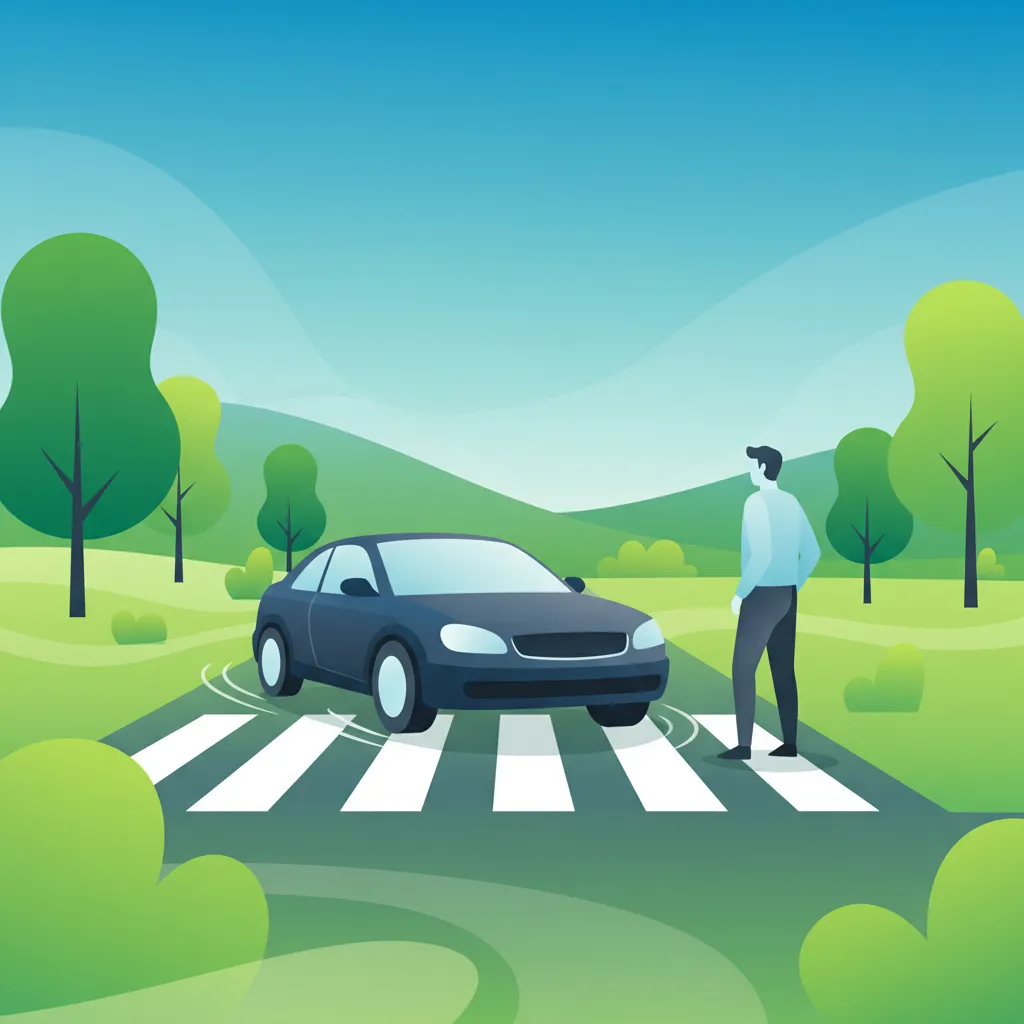
Pedestrian crossings, also known as zebra crossings, are designated areas designed to provide a safe passage for pedestrians and drivers of invalid carriages across the road. As a driver in the Netherlands, you have specific duties to ensure their safety. This page details your obligations, how to approach these crossings, and what priority rules apply, especially concerning vulnerable road users.
Theory topic content overview
Read the full theory topic guide for Dutch Pedestrian Crossings with structured, easy-to-scan content built for learners in the Netherlands. This detailed section explains the exact rule, meaning, traffic context, comparison points, and exam logic behind this Dutch driving theory topic so you can study faster, understand the concept more clearly, and avoid common interpretation mistakes on the theory test.
Pedestrian crossings are specially designated areas on the road designed to allow pedestrians and certain other road users to cross safely. In the Netherlands, these are most commonly known as zebra crossings due to their distinctive white stripe markings on the asphalt, resembling a zebra's coat. Recognising and correctly responding to these crossings is fundamental for road safety and a key part of the Dutch driving theory exam (CBR exam).
A pedestrian crossing clearly indicates a point where drivers must be prepared to yield priority to vulnerable road users. It's a critical interface between vehicle traffic and those on foot, or in invalid carriages, requiring heightened awareness and specific driving behaviour.
The rules surrounding pedestrian crossings are paramount for several reasons:
The core principle at a Dutch pedestrian crossing is yielding priority. As a driver, you must give way to:
This rule means you cannot assume a pedestrian will wait for you; you must be prepared to stop.
While zebra crossings usually grant priority to pedestrians, there's a crucial hierarchy: traffic lights always override the rules of a pedestrian crossing.
In the Netherlands, specific rules apply to particularly vulnerable individuals:
Approaching a pedestrian crossing requires proactive, defensive driving:
Understanding what a pedestrian crossing is not is just as important as knowing what it is:
Learners often lose points on pedestrian crossing questions in the CBR exam due to specific misunderstandings:
When it comes to pedestrian crossings (zebra crossings) in the Netherlands, remember this: vulnerability dictates priority. Always anticipate pedestrians, be prepared to stop, and communicate your intentions clearly. Your responsibility as a driver is to ensure the safety of those who are most exposed, and this commitment is heavily tested in the CBR exam and in daily Dutch traffic. Drive defensively and keep a watchful eye for any activity near these vital crossing points.
In the Netherlands, zebra crossings grant pedestrians and invalid carriage drivers legal priority, established under Dutch traffic law Article 49, requiring drivers to yield to those crossing or clearly waiting. Traffic lights always supersede zebra crossing rules, meaning when lights control a crossing, drivers follow signals, not markings. A critical exam rule is the absolute prohibition on overtaking before or on a pedestrian crossing, regardless of visibility. Enhanced priority applies to blind or partially sighted pedestrians carrying a white cane with red rings and all persons with disabilities, even outside marked crossings. Approach by reducing speed, signalling your intentions early with brake lights, and stopping clearly before the white stripes to ensure pedestrian safety.
A short set of high-value points that capture the most important ideas from this theory explanation.
Drivers must give way to both pedestrians and invalid carriage drivers who are crossing or clearly waiting to cross at a designated zebra crossing
Traffic lights always override zebra crossing rules — when lights are present, follow the signals, not just the markings
Overtaking another vehicle immediately before or on a pedestrian crossing is strictly forbidden, regardless of whether pedestrians are visible
Blind or partially sighted pedestrians carrying a white cane with red rings, and all other persons with disabilities, have enhanced priority even outside marked crossings
If a pedestrian is clearly waiting at the kerb with the intention to cross, they must be treated the same as someone already on the crossing
Never overtake before or on a zebra crossing — this is a major CBR exam trap, even when the road appears clear
Invalid carriage drivers (mobility scooters, electric wheelchairs) using a pedestrian crossing have the same priority as pedestrians
When traffic lights control a crossing, follow the light signals — zebra markings become secondary
Yield to pedestrians who are waiting at the crossing, not only those already walking across
Parking or stopping on a zebra crossing is prohibited — keep the crossing clear at all times
Assuming overtaking is allowed when no pedestrians are visible — the prohibition is absolute before and on the crossing
Forgetting that invalid carriage drivers using a crossing also have legal priority and must be yielded to
Believing zebra crossing priority always applies — forgetting that traffic lights override this priority
Not signalling braking intentions early to traffic behind, causing sudden stops and potential rear-end collisions
Thinking a pedestrian must be actively on the crossing before yielding — waiting pedestrians have equal priority
Start with a short, direct summary of Dutch Pedestrian Crossings before reading the full explanation below.
When approaching a pedestrian crossing (zebra crossing) in the Netherlands, drivers must always give way to pedestrians and drivers of invalid carriages who are crossing or clearly waiting to cross. It is crucial to reduce speed, be prepared to stop, and make your intentions clear to traffic behind you. This rule prioritizes vulnerable road users and is vital for road safety.
Review the most important terms, rule signals, and traffic concepts linked to Dutch Pedestrian Crossings.
Explore related theory topic pages connected to Dutch Pedestrian Crossings and continue with the next useful rule explanation.
See the common search queries learners use when trying to understand Dutch Pedestrian Crossings in the Netherlands.

Ready to deepen your understanding? Browse our comprehensive library of Dutch driving theory topics, rules, and concepts. Each section offers detailed explanations to help you solidify your knowledge and prepare thoroughly for your upcoming CBR driving theory examination.
Explore Driving Theory TopicsTheory topic content overview
A short set of high-value points that capture the most important ideas from this theory explanation.
Drivers must give way to both pedestrians and invalid carriage drivers who are crossing or clearly waiting to cross at a designated zebra crossing
Traffic lights always override zebra crossing rules — when lights are present, follow the signals, not just the markings
Overtaking another vehicle immediately before or on a pedestrian crossing is strictly forbidden, regardless of whether pedestrians are visible
Blind or partially sighted pedestrians carrying a white cane with red rings, and all other persons with disabilities, have enhanced priority even outside marked crossings
If a pedestrian is clearly waiting at the kerb with the intention to cross, they must be treated the same as someone already on the crossing
Never overtake before or on a zebra crossing — this is a major CBR exam trap, even when the road appears clear
Invalid carriage drivers (mobility scooters, electric wheelchairs) using a pedestrian crossing have the same priority as pedestrians
When traffic lights control a crossing, follow the light signals — zebra markings become secondary
Yield to pedestrians who are waiting at the crossing, not only those already walking across
Parking or stopping on a zebra crossing is prohibited — keep the crossing clear at all times
Assuming overtaking is allowed when no pedestrians are visible — the prohibition is absolute before and on the crossing
Forgetting that invalid carriage drivers using a crossing also have legal priority and must be yielded to
Believing zebra crossing priority always applies — forgetting that traffic lights override this priority
Not signalling braking intentions early to traffic behind, causing sudden stops and potential rear-end collisions
Thinking a pedestrian must be actively on the crossing before yielding — waiting pedestrians have equal priority
Start with a short, direct summary of Dutch Pedestrian Crossings before reading the full explanation below.
When approaching a pedestrian crossing (zebra crossing) in the Netherlands, drivers must always give way to pedestrians and drivers of invalid carriages who are crossing or clearly waiting to cross. It is crucial to reduce speed, be prepared to stop, and make your intentions clear to traffic behind you. This rule prioritizes vulnerable road users and is vital for road safety.
Review the most important terms, rule signals, and traffic concepts linked to Dutch Pedestrian Crossings.
Explore related theory topic pages connected to Dutch Pedestrian Crossings and continue with the next useful rule explanation.
See the common search queries learners use when trying to understand Dutch Pedestrian Crossings in the Netherlands.
Ready to deepen your understanding? Browse our comprehensive library of Dutch driving theory topics, rules, and concepts. Each section offers detailed explanations to help you solidify your knowledge and prepare thoroughly for your upcoming CBR driving theory examination.
Explore Driving Theory TopicsUse this exam-focused revision tip to understand how Dutch Pedestrian Crossings is likely to appear in theory questions for learners in the Netherlands. This section helps you identify the most testable part of the rule, avoid common traps, and remember the concept more effectively during Dutch driving theory exam preparation.
A common mistake in the CBR exam is forgetting that you must give way to pedestrians *waiting* to cross, not just those already on the crossing. Also, remember that traffic lights override zebra crossing rules, and overtaking another vehicle *before or on* a pedestrian crossing is strictly forbidden, even if no pedestrians are visible.
Read direct answers to the most common learner questions about Dutch Pedestrian Crossings in the Netherlands. This FAQ focuses on rule confusion, practical meaning, comparison with similar concepts, and the exact uncertainties that appear most often in Dutch driving theory revision and exam preparation.
In the Netherlands, a pedestrian crossing, often called a zebra crossing, is a marked area on the road where pedestrians have priority to cross. It's indicated by white stripes on the road and often by a blue sign with a pedestrian.
Yes, drivers must always give way to pedestrians and drivers of invalid carriages who are crossing or clearly waiting to cross at a designated pedestrian crossing, unless traffic lights indicate otherwise.
It is strictly forbidden to overtake any vehicle immediately before or on a pedestrian crossing, even if no pedestrians are present. This ensures maximum visibility and safety.
Yes, if there are traffic lights present at a pedestrian crossing, their signals take precedence over the zebra crossing markings. Pedestrians must follow the light signals.
Vulnerable road users include pedestrians, blind or partially sighted persons (especially with a white cane with red rings), and drivers of invalid carriages, all of whom receive priority at pedestrian crossings.
To signal your intention, release the accelerator early, brake lightly and in good time, allowing the vehicle behind you to anticipate your stop and prevent sudden braking.
A flashing yellow pedestrian light signifies caution. Pedestrians may cross, but they must give way to other traffic, as opposed to a green light where they have priority.
No, you are not allowed to stop or park on a pedestrian crossing, nor immediately before it if it obstructs the view for other road users. Keep the crossing clear at all times.
Leverage the targeted practice search to find questions that challenge your understanding of specific Dutch traffic rules or road signs. Focus your study efforts on areas where you need improvement and build a solid foundation for passing your CBR driving theory exam with confidence.